
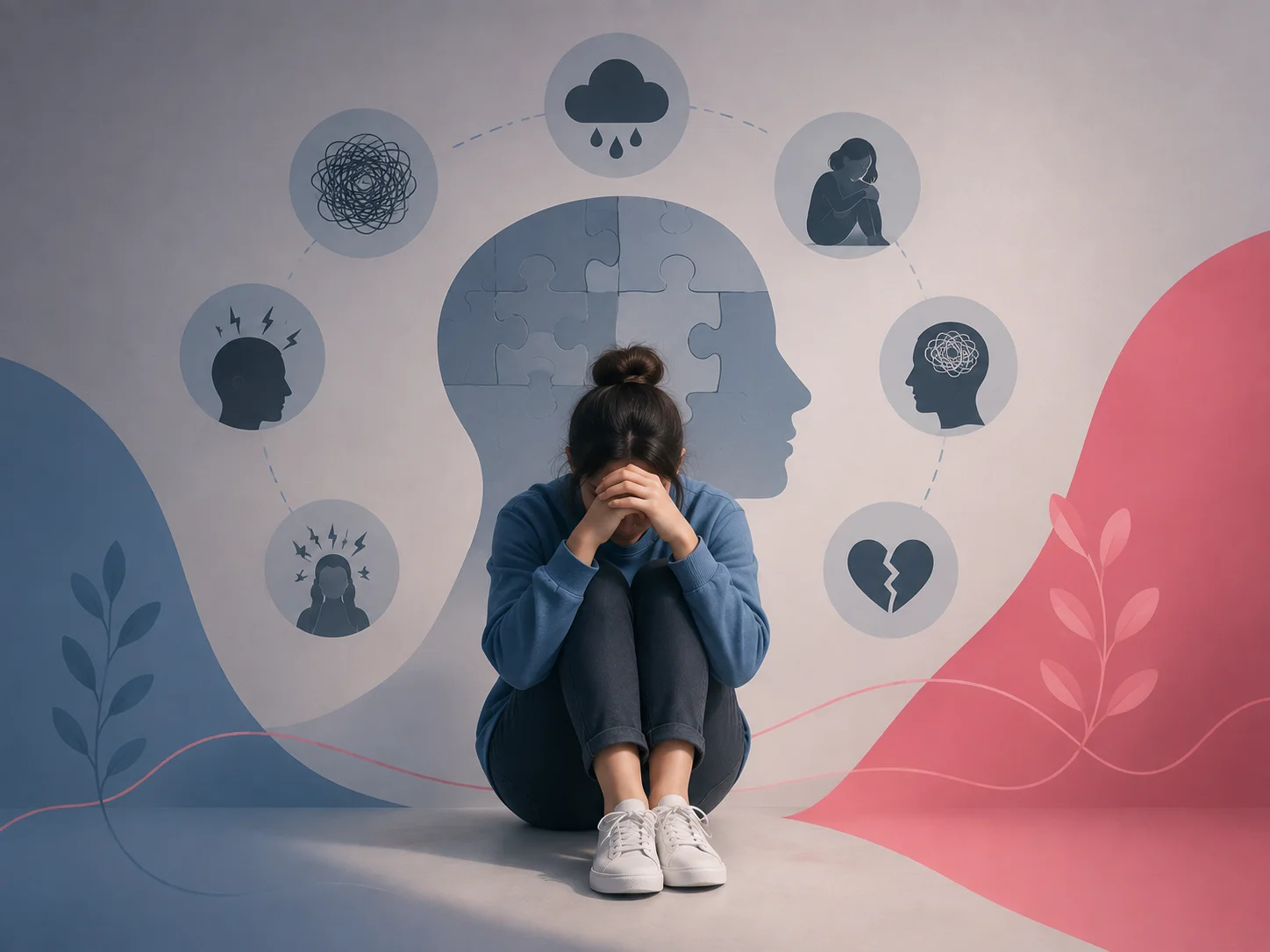
Common mental health disorders are among the most prominent health challenges facing the world in the modern era. “According to the World Health Organization, more than 450 million people worldwide suffer from various mental disorders.” These disorders negatively affect thoughts, emotions, and behaviors, and consequently have an impact on quality of life, social relationships, and even a person’s ability to work. In this article, we will explore in simple detail the most common types of mental health disorders, their causes, symptoms, diagnosis and treatment methods, prevention strategies, and how to take care of your mental health.
What Causes Common Mental Health Disorders?
Common mental health disorders are a group of mental conditions that negatively affect thinking, mood, and even behavior. Their impact and severity vary from one person to another. They may be mild and relatively easy to treat in one person, while in another they may be chronic and require long-term follow-up.
There is a difference between mental illness and mental disorders. Mental illness includes common conditions such as depression and anxiety, while the term mental disorder is often used to describe more severe conditions such as schizophrenia.
We should not neglect mental health because it directly affects physical health, a person’s productivity, and social relationships. Ignoring mental health concerns can lead to worsening symptoms and make treatment more difficult later.
“Do not postpone your emotional well-being… Take the first step today and book an appointment with the counselor to find the support that is right for your condition.”
The Most Common Types of Mental Health Disorders:
There are many types of common mental health disorders that vary in their symptoms and severity. Some of the most common types include:
1. Depression:
Depression is one of the most common mental health disorders worldwide. It is characterized by deep feelings of sadness, loss of motivation, and disturbances in sleep and appetite. If left untreated, this may lead to isolation and a loss of interest in life.
2. Anxiety and Panic Disorder:
A person with anxiety may experience persistent stress and constant fear. They may also experience sudden panic attacks accompanied by a rapid heartbeat, as well as shortness of breath.
3. Schizophrenia:
A person with schizophrenia experiences a severe mental disorder that disconnects them from reality. They may also experience hallucinations and have difficulty thinking logically.
4. Bipolar Disorder:
A person with bipolar disorder experiences severe mood fluctuations, ranging between periods of excessive activity or elevated mood (mania) and periods of depression.
5. Obsessive-Compulsive Disorder (OCD):
OCD appears in the form of recurring and disturbing thoughts and compulsive behaviors, such as excessive hand washing or repeatedly performing certain actions involuntarily.
“If you find yourself experiencing any of these symptoms or need someone who will listen to and understand you, contact the specialist now and book your consultation to begin your recovery journey.”
For more information, you can learn more about psychotherapy.
Treatment Methods for Common Mental Health Disorders
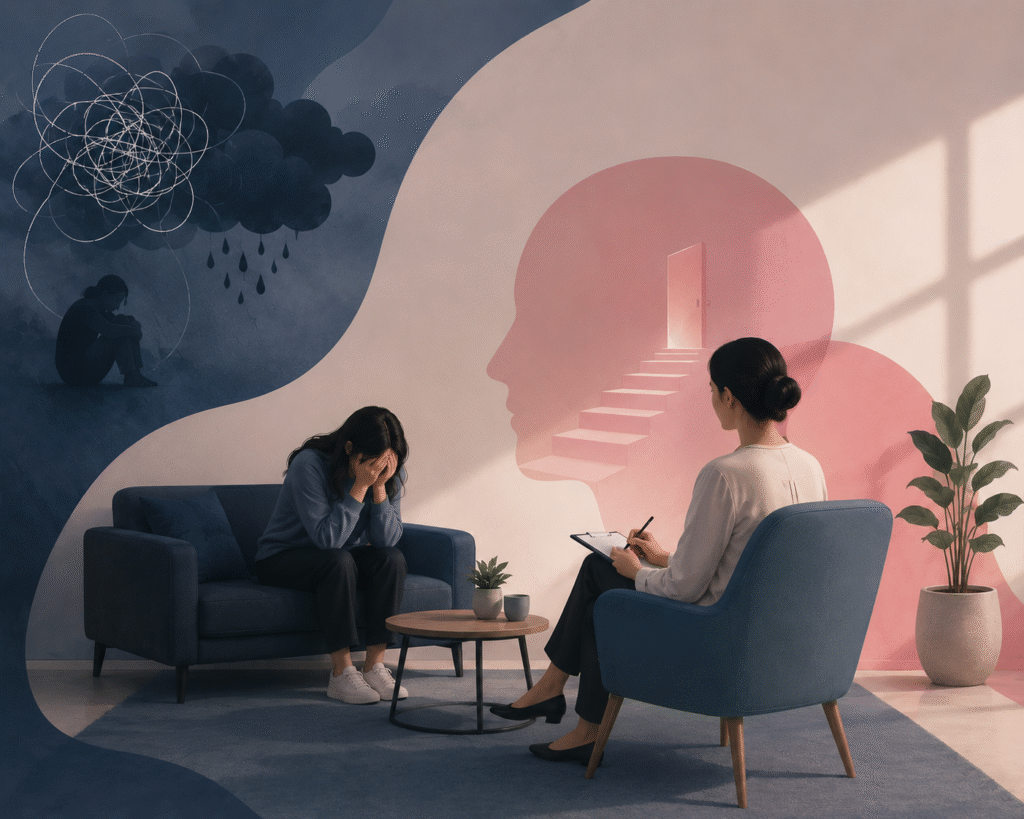
To overcome common mental health disorders and receive appropriate treatment, there are several approaches available to patients. No medication should be taken without a medical prescription in order to avoid serious side effects. These approaches include:
● Medication:
This includes antidepressants, anti-anxiety medications, and mood stabilizers, which should only be prescribed and used under medical supervision.
● Rehabilitation and Social Support:
This involves helping the patient reintegrate into society through psychological support programs and participation in various social activities.
● Activities That Complement Treatment:
There are activities that patients can engage in as a complement to their treatment, such as exercise, meditation, and art and music therapy. These activities can help improve mood and reduce stress.
How to Prevent Common Mental Health Disorders
Preventing common mental health disorders is not always easy and is no less important than treating them. To maintain balanced mental health and help you cope more effectively with the challenges of everyday life, here are some practical steps you can follow:
1. Building a Healthy Lifestyle:
This includes getting enough regular sleep, exercising regularly to stimulate the release of feel-good hormones such as serotonin, and maintaining a balanced diet containing vegetables, fruits, and proteins.
2. Managing Stress and Pressure:
This can be done by practicing relaxation techniques such as deep breathing and meditation, organizing daily tasks to avoid excessive pressure, and taking short breaks during study or work.
3. Building a Social Support Network:
A social support network can be built through maintaining regular communication with friends and family, participating in group activities that increase the sense of belonging, and avoiding isolation when experiencing psychological difficulties.
4. Seeking Help Early:
It is important to seek help promptly by consulting a mental health professional when symptoms of anxiety or depression appear. You should also not hesitate to speak with a psychiatrist or counselor when needed.
5. Strengthening the Spiritual and Intellectual Side:
The spiritual and intellectual aspects can be strengthened by reading books that promote positive thinking, as well as engaging in religious practices and spiritual activities that provide a sense of peace and reassurance.
“You are not alone… We are here to accompany you on your journey toward peace of mind. Book your consultation today with the specialist.”
Conclusion:
Mental health disorders are not a source of shame and are not a sign of weakness. They are health challenges that require awareness and care, just like other physical illnesses.
Understanding their causes, symptoms, treatment approaches, and prevention methods is the essential first step toward achieving balance in life and finding emotional well-being. If you or someone in your family or among your friends is experiencing psychological symptoms, do not hesitate to consult a professional to receive the necessary support.